CURRENT PROJECTS
My work focuses on how people relate to each other and the places in which they dwell, and how those relationships shape environmental decision-making. I study how governance is enacted through everyday practices like care, labor, and responsibility, rather than something defined by policy alone.
Most of my research is based on long-term collaboration with Mẽbêngôkre-Kayapó partners, an Indigenous community in Brazil’s Amazon and Cerrado regions. I combine ethnography, collaborative event ethnography, policy analysis, and geospatial methods to trace how authority moves from everyday lifeworlds into regional and international policy spaces. Across projects, I ask how governance is practiced, embodied, and negotiated across scales.
Much of this work is connected to The A’Ukre Project, a long-term partnership supporting research, education, and collaboration with the Mẽbêngôkre-Kayapó community of A’Ukre. Through this partnership, I have helped co-direct and coordinate a multi-year field course that brings students into community and research settings to learn how conservation, governance, and livelihoods are shaped through Indigenous knowledge, everyday practice, and cross-cultural collaboration.
I am an environmental anthropologist by training, but an interdisciplinary social scientist in practice. Beyond research and teaching, I use collaborative research and applied writing to translate complex social and environmental issues into accessible materials for policy, nonprofit, and academic audiences.
-
My research examines Indigenous environmental governance and the longstanding political roles of Mẽbêngôkre-Kayapó women. It focuses on how their governance practices challenge dominant assumptions about gender, leadership, and ownership.
This work has three aims: 1) Elevating gendered governance, demonstrating how domestic labor, like weaving, body painting, feeding, and other forms of care, is governance work. 2) Rethinking ownership. Analyze ownership-as-responsibility: objects, land, and knowledge are held through care and accountability, not dominion or control. 3) Bridging scales. Trace how these relations scale, from the plaza to Cerrado burning and parakeet care, and into an intercultural policy forum to make visible a continuum of governance.
-
Mẽbêngôkre-Kayapó Peoples have long used fire to manage and enhance Amazonian and Cerrado landscapes. This work examines their cultural burning practices and how they challenge forest-centered conservation frameworks.
By integrating ethnographic research with MODIS/VIIRS fire detection data, I show how dominant definitions of “forest protection” obscure fire-adapted mosaics and the governance practices that sustain them.
-
This research examines how Indigenous governance extends into media production, digital archives, and data circulation. Working in collaboration with Mẽbêngôkre-Kayapó partners, we explore how questions of ownership, authority, and representation are negotiated through audiovisual documentation, protocol co-creation, and community-based media infrastructures.
Rather than treating “data” as extractable information, I examine how digital ecologies become sites where responsibility, authorship, and political authority are actively produced.
-
I contribute to From Presence to Influence, a multi-year, multi-sited research project led by Drs. Kim Marion Suiseeya (Rice University) and Laura Zanotti (University of Cincinnati), which examines the politics of Indigenous representation in global environmental governance.
As a graduate research assistant, I contributed to data collection, processing, and analysis of collaborative event ethnographic data from sites such as the XVI ISE Congress (Belém) and COP25 (Madrid). I also trained and supervised undergraduate researchers in qualitative methods and interdisciplinary data management.
This work builds a collective methodological infrastructure for studying representation, authority, and plural sovereignties in international policy spaces.
-
As an undergraduate at Arizona State University, I joined the Culture, Health, and Environment Lab (Drs. Amber Wutich and Alexandra Brewis), where I built a broad qualitative methods skillset through the Global Ethnohydrology Study (text analysis, qualitative coding, data collection/management). I also worked in Dr. Michael E. Smith’s Mesoamerican Archaeology Lab, using quantitative methods to measure wealth inequality in Postclassic Central Mexican Nahuatl communities and translating Spanish Colonial wills and other testaments to track inflation across the peso, real, and Aztec currencies (e.g., cacao).
These projects grounded my current mixed-methods approach, combining archival, quantitative, and qualitative analysis.
Relational Governance Across Scales
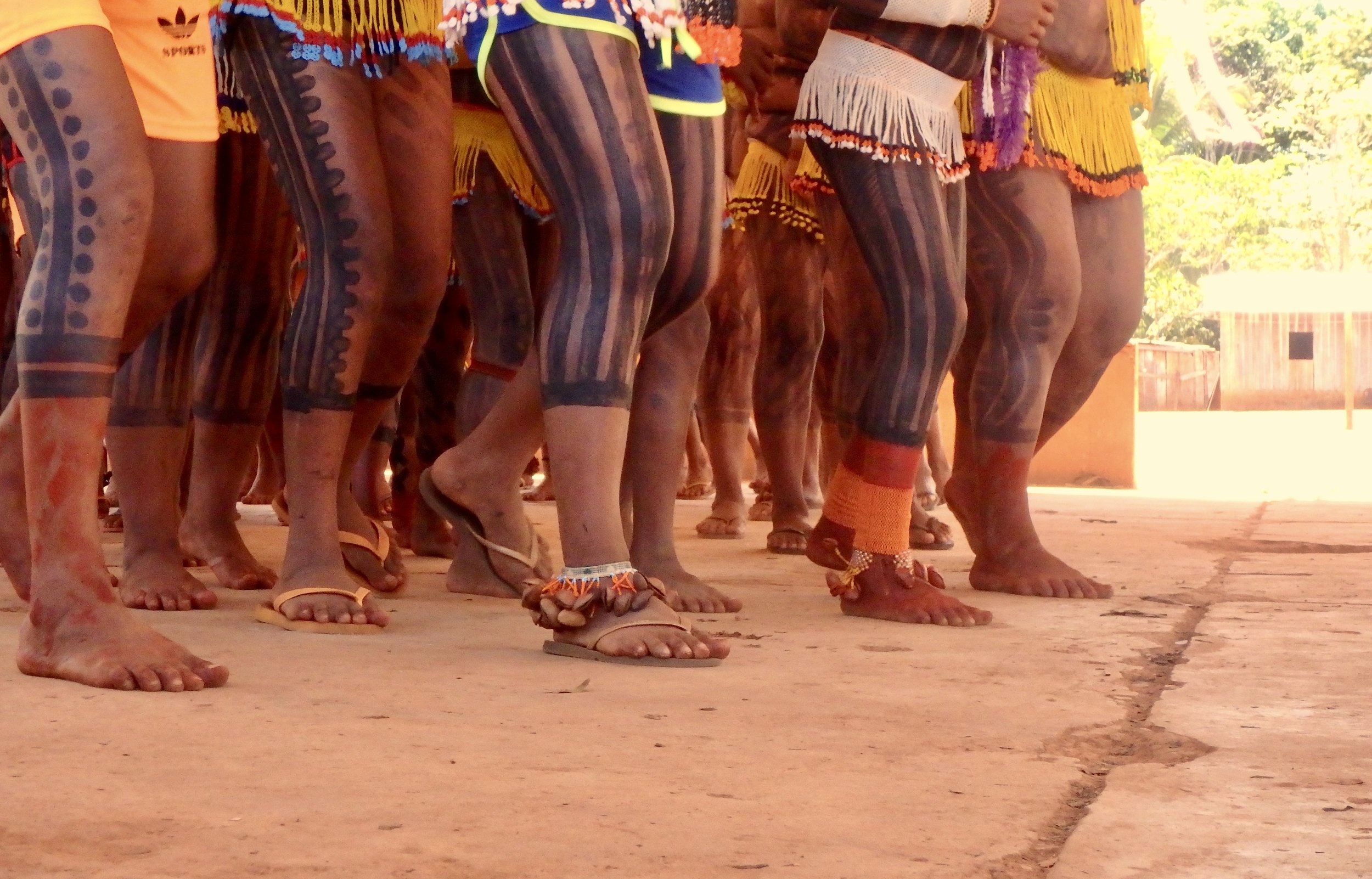
My research examines Indigenous environmental governance and the longstanding political roles of Mẽbêngôkre-Kayapó women. It focuses on how their governance practices challenge dominant assumptions about gender, leadership, and ownership.
This work has three aims: 1) Elevating gendered governance, demonstrating how domestic labor, like weaving, body painting, feeding, and other forms of care, is governance work. 2) Rethinking ownership. Analyze ownership-as-responsibility: objects, land, and knowledge are held through care and accountability, not dominion or control. 3) Bridging scales. Trace how these relations scale, from the plaza to Cerrado burning and parakeet care, and into an intercultural policy forum to make visible a continuum of governance.
Cultural Landscape Management
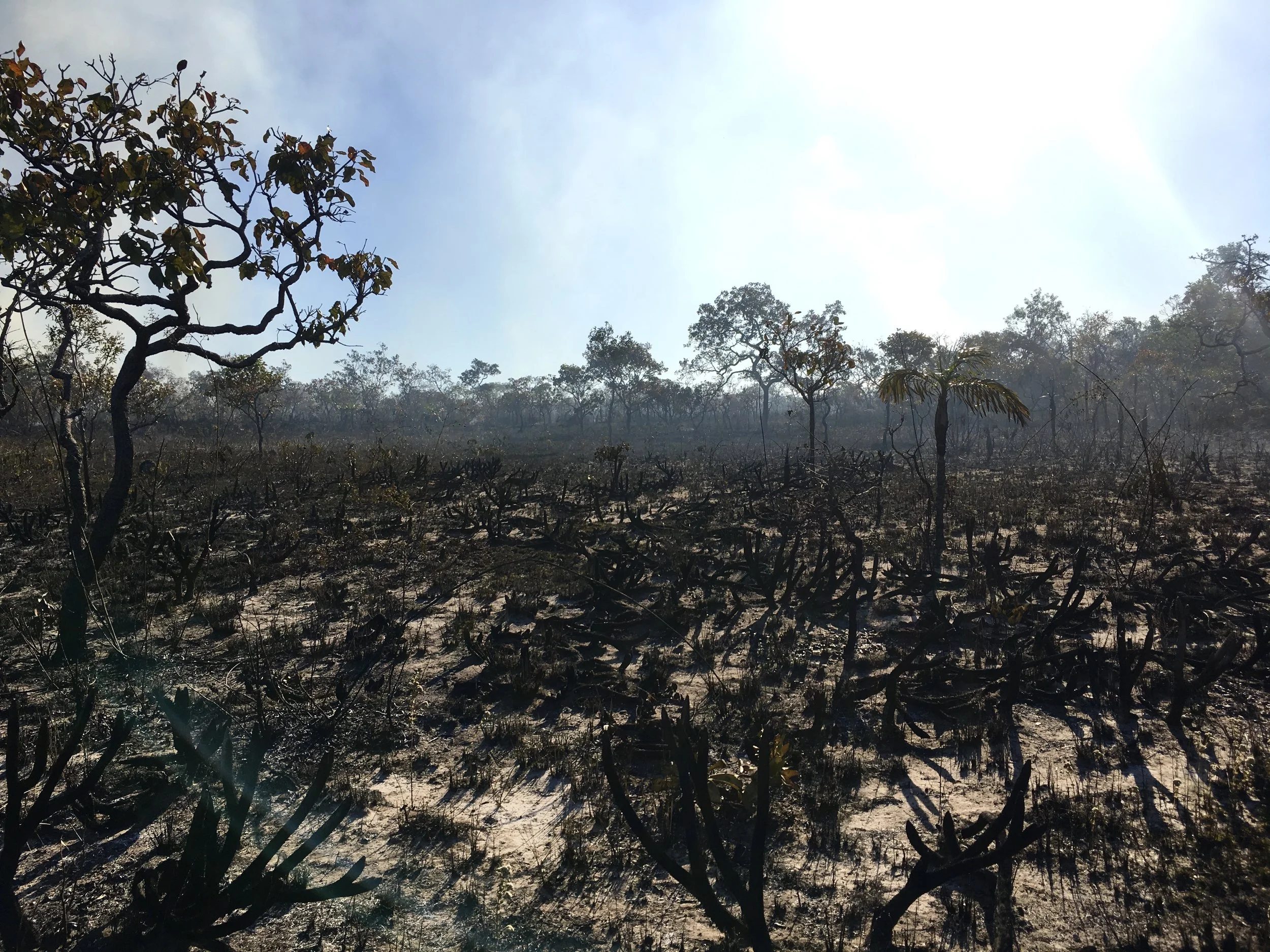
Mẽbêngôkre-Kayapó Peoples have long used fire to manage and enhance Amazonian and Cerrado landscapes. This work examines their cultural burning practices and how they challenge forest-centered conservation frameworks.
By integrating ethnographic research with MODIS/VIIRS fire detection data, I show how dominant definitions of “forest protection” obscure fire-adapted mosaics and the governance practices that sustain them.

Data Sovereignty
This research examines how Indigenous governance extends into media production, digital archives, and data circulation. Working in collaboration with Mẽbêngôkre-Kayapó partners, we explore how questions of ownership, authority, and representation are negotiated through audiovisual documentation, protocol co-creation, and community-based media infrastructures.
Rather than treating “data” as extractable information, I examine how digital ecologies become sites where responsibility, authorship, and political authority are actively produced.
Collaborative Event Ethnography
I contribute to From Presence to Influence, a multi-year, multi-sited research project led by Drs. Kim Marion Suiseeya (Rice University) and Laura Zanotti (University of Cincinnati), which examines the politics of Indigenous representation in global environmental governance.
As a graduate research assistant, I contributed to data collection, processing, and analysis of collaborative event ethnographic data from sites such as the XVI ISE Congress (Belém) and COP25 (Madrid). I also trained and supervised undergraduate researchers in qualitative methods and interdisciplinary data management.
This work builds a collective methodological infrastructure for studying representation, authority, and plural sovereignties in international policy spaces.
Research Foundations
As an undergraduate at Arizona State University, I joined the Culture, Health, and Environment Lab (Drs. Amber Wutich and Alexandra Brewis), where I built a broad qualitative methods skillset through the Global Ethnohydrology Study (text analysis, qualitative coding, data collection/management). I also worked in Dr. Michael E. Smith’s Mesoamerican Archaeology Lab, using quantitative methods to measure wealth inequality in Postclassic Central Mexican Nahuatl communities and translating Spanish Colonial wills and other testaments to track inflation across the peso, real, and Aztec currencies (e.g., cacao).
These projects grounded my current mixed-methods approach, combining archival, quantitative, and qualitative analysis.